

Does PDLC Film Require Maintenance? A Practical, Real-World Guide

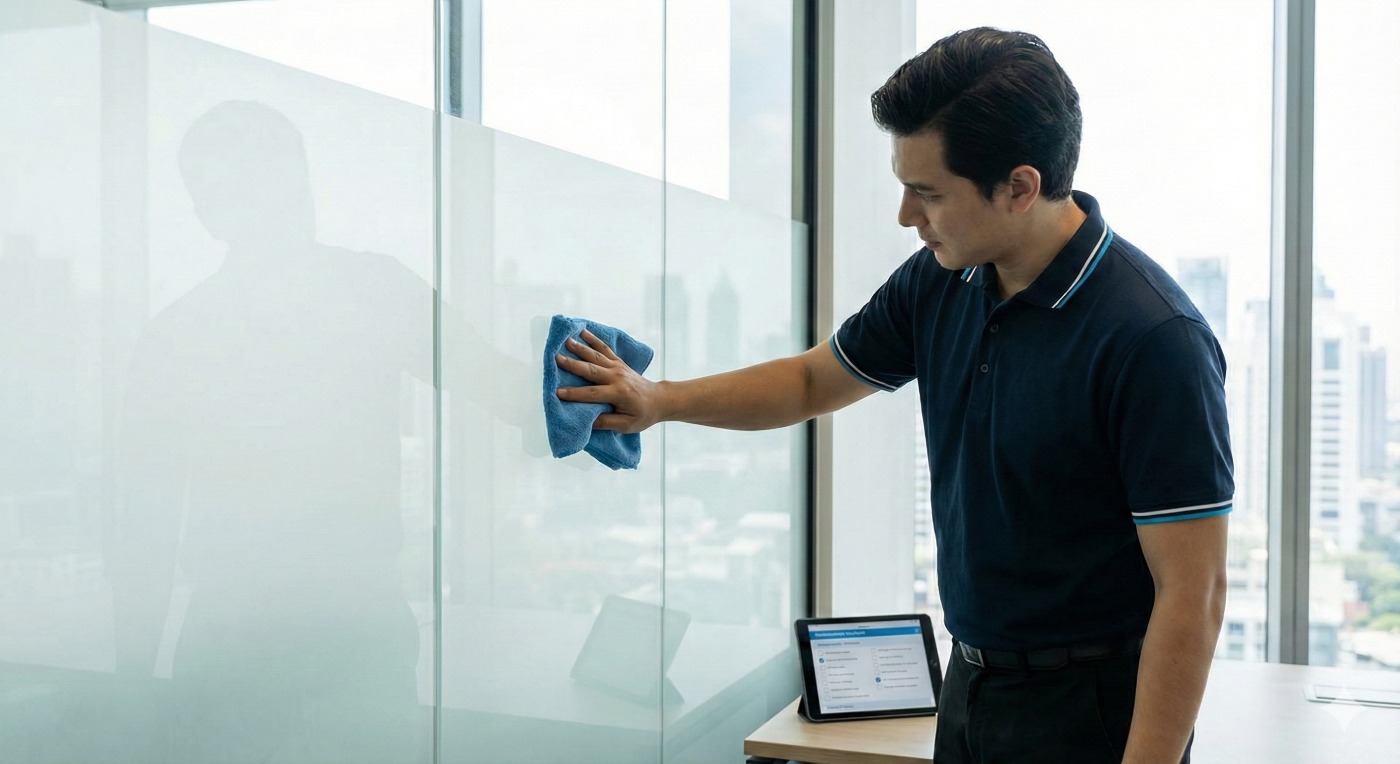
For architects, facility managers, and homeowners alike, the installation of switchable smart glass is a significant upgrade. It transforms a static environment into a dynamic one, offering privacy on demand. But once the installation team has left and the novelty settles into daily utility, a practical question remains: Does PDLC film require maintenance?
The answer is a nuanced yes. While it does not require the heavy scrubbing of external windows or the dry-cleaning of curtains, PDLC (Polymer-Dispersed Liquid Crystal) technology is an electrical component, not just a pane of glass. It demands a specific operational discipline to ensure it retains its clarity and responsiveness for its full lifespan.
This guide explores the realities of caring for SmartPro Glass products, moving beyond simple cleaning tips. Detailed cleaning requirements, maintenance procedures, and warranty conditions are outlined in the corresponding cleaning & maintenance and warranty documents.
Table of Contents
The Operational “Heartbeat”: The 4-Hour Rule
To understand maintenance, one must first understand the mechanism. When smart glass is transparent (On), an electrical current aligns the liquid crystals inside the film. When the power is cut (Off), these crystals scatter, creating privacy.
The most critical maintenance task involves no cleaning products at all—simply the management of this electrical state. The liquid crystals are not designed to be held in rigid alignment indefinitely. If left “On” for weeks or months without a break,, potentially reduces the overall lifespan of the unit.
The Protocol: We recommend that the system be switched OFF (opaque) for at least 4 hours every 24 hours.
For most commercial and residential clients, this is an organic part of the day. Turning the glass off overnight or outside of office hours allows the crystals to “relax.” As a secondary benefit, this practice optimises energy efficiency; in the opaque state, the film blocks 99% of UV rays and significantly reduces infrared heat gain, lowering the load on climate control systems.
Cleaning Protocols: Gentle Precision
A common misconception is that Smart Film can be treated like standard glazing. This is incorrect. Standard window glass is hard and chemically inert; the PET layer of a retrofit smart film is a technical plastic laminate. It is durable, but it requires a softer touch to avoid surface degradation.
The “Less is More” Approach
At SmartPro Glass, we advocate for the gentlest possible cleaning method. The use of harsh chemicals, industrial solvents, or heavy doses of alcohol is unnecessary and can, over time, degrade the surface coating.
The Approved Method:
- Preparation: Use a high-quality, lint-free microfibre cloth.
- Dampen Slightly: The cloth should be merely damp with water, never soaking wet.
- Technique: Wipe the surface gently in circular motions to lift dust and fingerprints.
- Dry: Ensure no moisture remains on the surface.
Maintenance Matrix: Safe vs. Unsafe
To simplify the care routine for cleaning staff or homeowners, refer to this compatibility matrix.
| Category | Status | Technical Note |
| Microfibre Cloth | ✅ Recommended | Must be lint-free. Paper towels are too abrasive for the PET surface. |
| Water (Damp) | ✅ Recommended | Use distilled water if your tap water has high lime scale content. |
| Ammonia Cleaners | ❌ PROHIBITED | Standard glass cleaners (e.g., Windex) can chemically attack the surface. |
| Soaking / Spraying | ❌ PROHIBITED | Never spray the glass directly. Runoff can enter the busbar and cause an electrical failure. |
| Abrasive Pads | ❌ PROHIBITED | Sponges or scourers will permanently scratch the outer coating. |
Crucial Warning on Moisture: Water is the natural enemy of electrical components. When cleaning, you must ensure that no liquid runs down the glass and pools at the bottom edge. If moisture seeps into the busbar (the electrical connection point usually hidden under the trim), it can cause a short circuit or damage the lamination. Always keep the edges dry.
The Chemistry of Installation: A Note on Sealants
While this falls under “maintenance” of the perimeter, it is the single most common cause of failure in the industry. If you are repainting a frame or resealing a gap near the glass, the choice of sealant is critical.
You must exclusively use Neutral-Cure Silicone.
Many standard silicones found in hardware stores are “Acetic Cure,” which release acetic acid (smelling of vinegar) as they dry. This acid is aggressive; if it comes into contact with the edge of the smart film, it will chemically attack the PDLC layer, causing it to fail or discolour. Whether you are a facility manager or a homeowner, ensure any contractor working near your glass is aware of this restriction.
Durability Context: Film vs. Laminated Glass
The maintenance approach varies slightly depending on which version of the technology you have installed.
- Smart Film (Retrofit): This product is applied to the surface of existing glass. Because the film is exposed, it is more susceptible to physical scratches from jewellery, watches, or abrasive cleaning pads. It requires a “white glove” mindset.
- Laminated Smart Glass: Here, the PDLC layer is safely sandwiched between two sheets of toughened glass. This makes the surface as durable as any standard window. While the “4-hour rule” still applies for the electronics, the surface itself is impervious to moisture and physical wear, making it the standard solution for bathrooms and wet areas.
Integrated Management
For commercial clients, maintenance can be automated. SmartPro Glass systems are compatible with Building Management Systems (BMS) and standard timers. By automating the “Off” cycles, you remove the human error factor, ensuring the 4-hour rest period happens every night without fail.
If you notice any flickering or responsiveness issues, this is rarely a cleaning issue. It is often a sign of a loose connection at the transformer or busbar. In these instances, we advise against DIY troubleshooting—contacting our technical team is the safest route.
FAQ: Common Questions
How often should I clean the smart glass?
There is no strict rule—clean it only when visibly dusty or marked. Over-cleaning is unnecessary. A light dusting with a dry microfibre cloth is often all that is needed to maintain clarity.
Can I use standard glass cleaner?
We do not recommend it. Many standard cleaners contain ammonia or other harsh agents that can be too aggressive for the PET surface of Smart Film. A slightly damp soft cloth is the safest and most effective method.
Is the maintenance different for bathrooms?
If you have Laminated Smart Glass in a bathroom, the glass surface is more resistant to water and can be cleaned like a shower screen. However, you must still ensure the electrical edges are fully sealed and dry. (Note: Retrofit film is not recommended for wet areas due to moisture sensitivity.)
Why do I need to turn it off every day?
Turning the film to “Off” (opaque) allows the liquid crystals to relax from their aligned state. This simple daily habit prevents “burn-in” and significantly extends the operational life of the product.
What if I scratch the film?
Retrofit film has a scratch-resistant coating, but it is not scratch-proof. Deep scratches cannot be buffed out like car paint. This is why using abrasive sponges or paper towels is strictly prohibited.