

Blog
Smart Glass Installation on Existing Windows: Can It Be Done?

The short answer is YES. Smart glass installation on existing windows is feasible, but the method depends entirely on what you intend to keep: the glass pane itself, or just the surrounding frame.
When clients ask if they can upgrade their current glazing to switchable PDLC (Polymer Dispersed Liquid Crystal) technology, they are essentially choosing between two distinct retrofit paths:
- Surface Application: Applying Self-Adhesive Smart Film directly onto the existing glass surface.
- Pane Replacement: Removing the existing glass and installing Switchable Laminated Smart Glass into the existing frames.
This article details the technical realities, environmental constraints, and wiring prerequisites for both methods to help you determine which approach fits your specific site conditions.
Table of Contents
The Retrofit Path: Smart Film vs. Laminated Glass
To upgrade existing windows effectively, you must match the product to the environment. The installation process varies significantly between the two core technologies.
Self-Adhesive Smart Film (The “True” Retrofit)
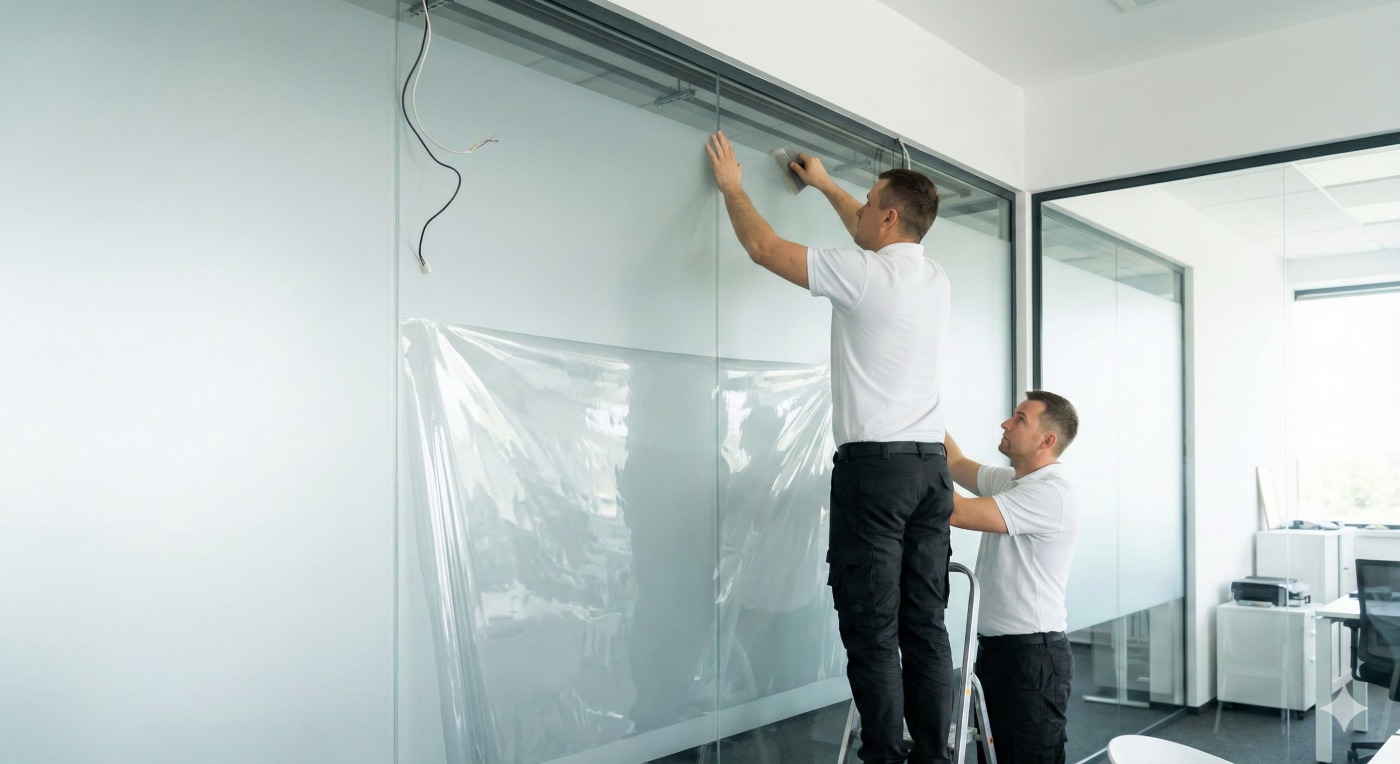
This is the primary method for smart glass installation on existing windows without removing the glass. The film includes a self-adhesive layer (peel-and-stick) and is applied to the surface of the current pane
- Best for: Interior windows, glass partitions, and dry environments.
- Feasibility: High. It utilises the existing glass structure.
- Lead Time: Approximately 10 working days.
- Constraint: strictly for indoor use. It cannot be exposed to weather, high humidity, or direct water contact.
Switchable Laminated Glass (The Replacement Retrofit)
If the existing glass is damaged, single-glazed when you require double, or located in a wet area (such as a bathroom or external facade), film is not an option. You must replace the glass unit entirely.
- Best for: External windows, bathrooms, wet rooms, and high-traffic doors.
- Feasibility: Moderate. Requires the existing frame to have sufficient depth to accommodate the new glass thickness.
- Lead Time: Approximately 30 working days.
- Constraint: Requires glazing works to remove the old pane and seal the new one.
Technical Feasibility Checklist
Before commissioning a smart glass installation on existing windows, you must assess the physical condition of the current glazing. If the substrate is compromised, the optical performance of the smart film will suffer.
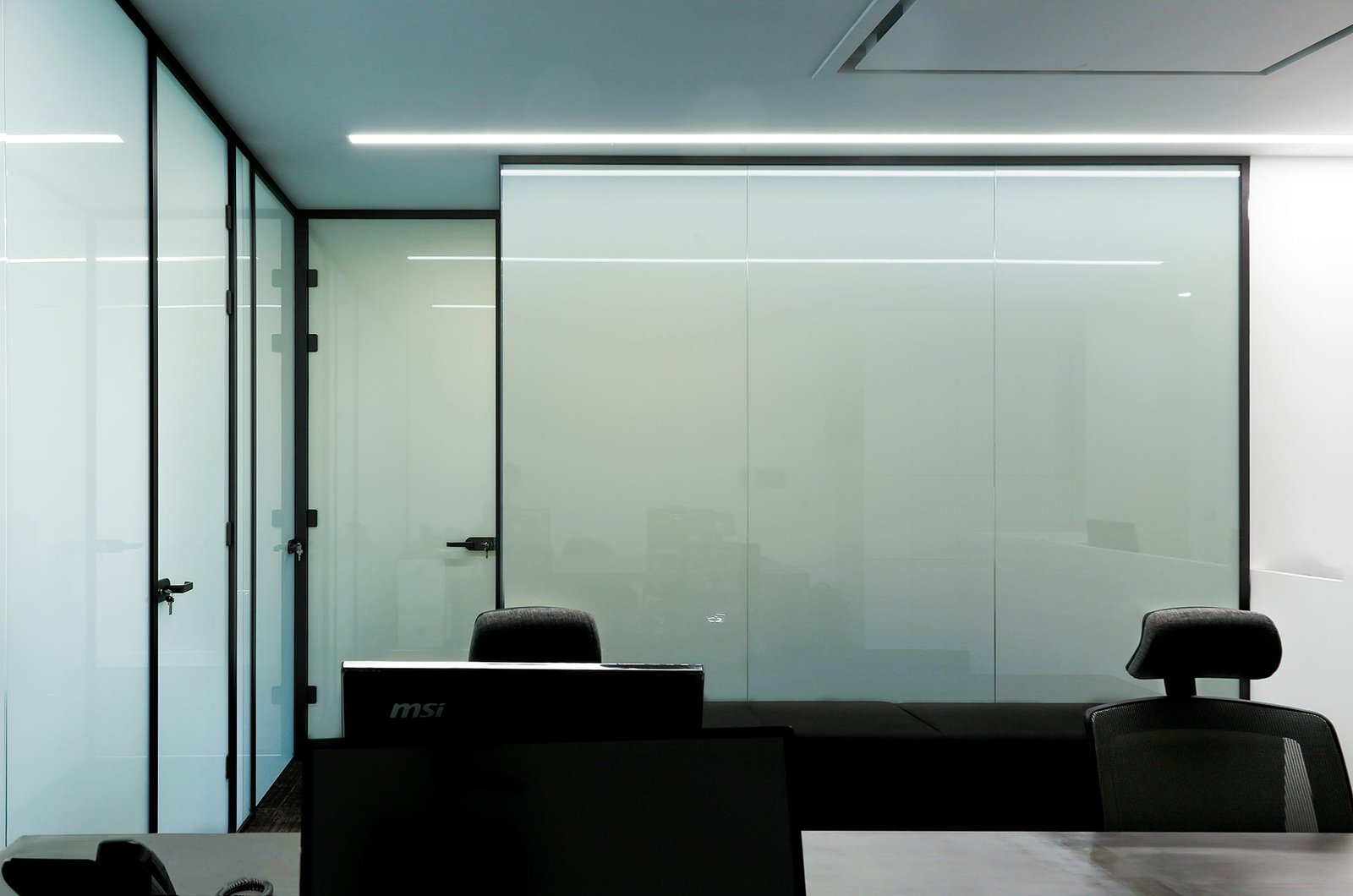
Note on Visuals: PDLC technology is not a “blackout” solution. When switched OFF (opaque), it provides visual privacy with a haze of under 3%, but light transmittance remains above 88%. Shadows may still be visible if an object is pressed directly against the glass.
Surface Quality (For Film Application)
Smart film is unforgiving regarding surface imperfections.
- Scratches: Deep scratches in existing glass can trap air bubbles during film application, creating permanent visual defects.
- Cleanliness: The glass must be chemically cleaned. Any silicone residue or stubborn grime will prevent adhesion.
- Flatness: Film applies best to flat surfaces. Heavily textured or patterned glass cannot be retrofitted with smart film.
Frame Integrity (For Wiring)
Smart glass is an electrical product. It requires a connection to the mains via a transformer.
- Frame Material: Aluminium and uPVC frames are generally easier to drill for cable routing than steel or hardwood.
- Access: Is there a route to run a cable from the window frame to a power point (fused spur) within 5 to 10 metres?
- Operable Windows: If the window opens (sliding, sash, or tilt-and-turn), the installation requires strictly managed cable loops or power transfer hinges to prevent wire fatigue.
The Wiring Reality: Hiding the “Busbar”
A common misconception regarding smart glass installation on existing windows is that the glass is entirely transparent edge-to-edge.
Every piece of smart film or glass has a busbar—a conductive copper strip usually located along the top or side edge. This is where the wires connect to the PDLC layer.
Concealing the Connections
In a retrofit scenario, visual management of the busbar is critical:
- Silicone Cap: We typically cover this with a neutral-cure silicone or a discreet trim.
- Frame Integration: Ideally, the wires exit the busbar and immediately enter the window frame, running inside the profile to the transformer.
- Surface Trunking: If drilling the existing frame is impossible, ultra-thin adhesive trunking may be required to hide the cable running down the frame.
Critical Installation Constraints
To ensure longevity and maintain the warranty, specific protocols must be followed during installation. SmartPro Glass mandates that installation is arranged through their team to guarantee these standards are met.
The Silicone Rule
This is the single most common cause of failure in DIY or unqualified retrofits.
- The Danger: Acid-cure silicone releases acetic acid as it cures. This acid attacks the PDLC layer, causing the liquid crystals to die. The result is “browning” or permanent transparency at the edges.
- The Requirement: Only neutral-cure, non-corrosive silicone specified by the manufacturer may be used for sealing all edges and busbars.
The 4-Hour Rule (Operational Maintenance)
PDLC technology relies on liquid crystals aligning when a current is passed through them
- To prevent “memory effect” (where the crystals lose their ability to scatter light and turn opaque), the glass must be switched OFF (opaque) for at least 4 hours every 24 hours
- Smart glass is not designed to be left transparent indefinitely. Timers are often installed to automate this cycle.
Environmental Limits
- Smart Film: Cannot be installed in steamy bathrooms or on the outside face of a window. Moisture ingress will delaminate the film layers.
- UV Stability: While high-quality films are UV stable, applying film to the inside of an external window facing intense, direct sunlight requires more attention.
Summary: Is Your Window Suitable?
Can smart glass be installed on your existing windows? Use this quick logic check:
| Condition | Recommended Solution |
| Interior glass, dry area, flat surface | Self-Adhesive Smart Film (Retrofit) |
| Bathroom / Wet Room | Laminated Smart Glass (Replace pane) |
| External Window (Double Glazing) | Laminated Smart Glass (Replace unit) or Film (Internal face only) |
| Heavily scratched existing glass | Laminated Smart Glass (Replace pane) |
Next Steps: Verify Your Retrofit
Determining if your windows are “smart glass ready” requires more than just measurements; it requires a visual check of the framing and power access. Retrofitting is a precise technical process, not a generic product purchase.
Do not rely on guesswork.
Before you commit to a specification, allow us to review your site conditions. Send us a wide-shot photo of the window and a close-up of the frame profile. Our technical team will assess:
- The Wiring Route: Can the cables be hidden within your specific frame type?
- Surface Suitability: Is the glass texture and condition safe for self-adhesive film?
Note: We recommend a site survey before ordering to make sure everything is ready and runs smoothly.