

Smart Glass for Offices: The Modern Way to Create Instant Privacy

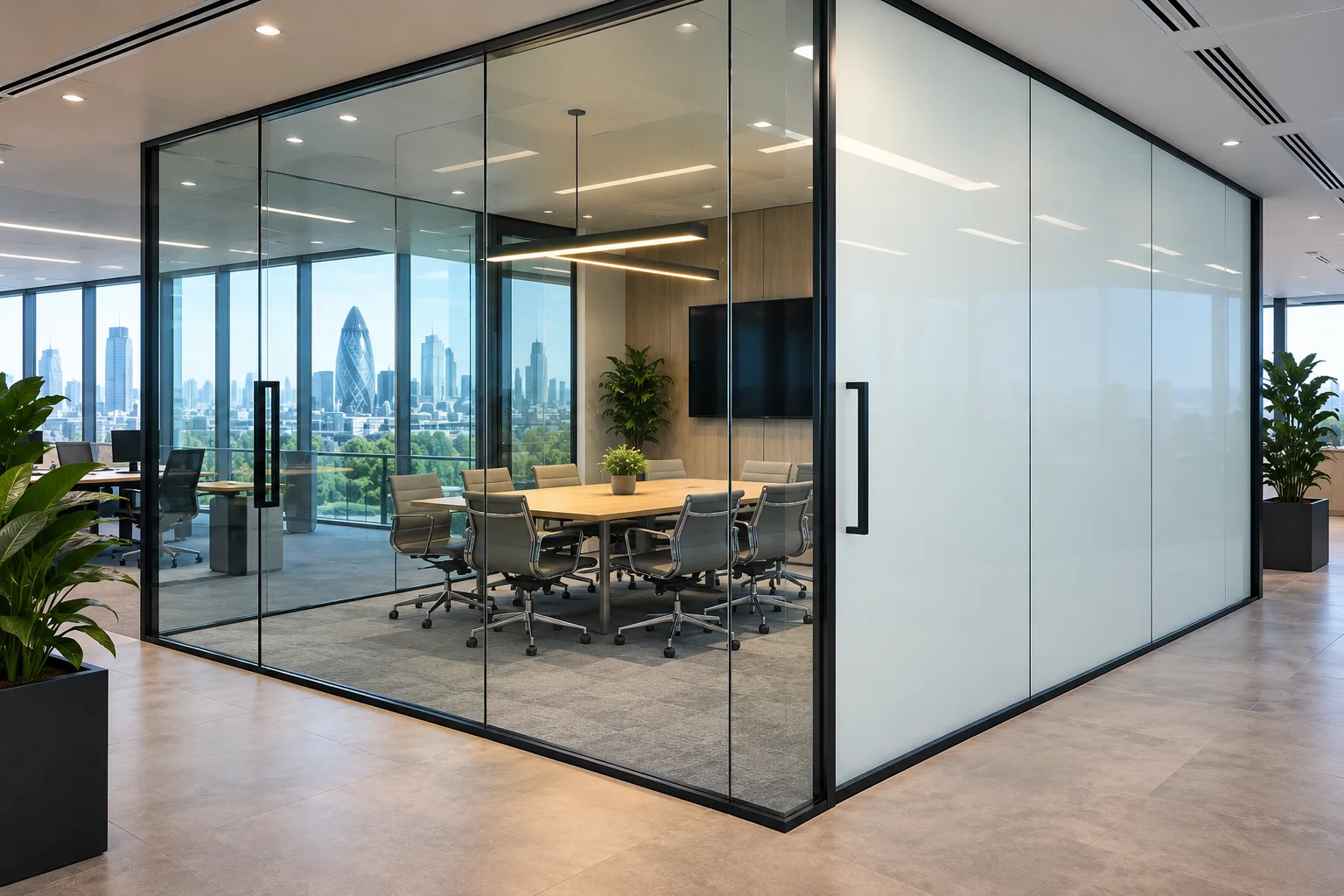
Modern offices are increasingly designed around glass. Meeting rooms, executive offices and internal partitions use glazing to bring daylight into the workplace and create a more open, connected environment. The challenge is that transparency is not always appropriate, particularly when confidential meetings, private conversations or focused work require greater visual privacy.
Smart glass for offices provides a flexible way to address this challenge without permanently closing spaces off. Using PDLC technology, switchable glazing can change from transparent to opaque at the touch of a switch, allowing the same room to serve different purposes throughout the working day.
This makes smart glass particularly useful for businesses that want the benefits of glazed office design while retaining control over privacy.
What Is Smart Glass for Offices?
Switchable smart glass incorporates a PDLC (Polymer Dispersed Liquid Crystal) layer within the glazing. When electrical power is applied, the glass becomes transparent, while switching the power off causes the glass to change to its opaque privacy state.
The result is a simple but effective change in how an office space can be used. A meeting room can remain visually connected to the wider workplace when not in use, then become private within seconds when a confidential meeting begins. SmartPro’s office smart glass solutions are designed for applications including meeting rooms, conference rooms, executive offices and glazed partitions.
Why Are Offices Moving Towards Flexible Privacy?
Traditional office privacy solutions such as blinds, curtains and permanent frosted glazing remain useful in many situations, but they each have limitations. Permanent frosting provides consistent privacy but removes the option of returning the glass to a transparent state, while blinds and curtains introduce additional physical components into the interior.
Switchable glazing takes a different approach by making the glass itself responsive to the requirements of the space. This means privacy can be introduced when required without permanently changing the appearance or function of the room.
| Office requirement | Traditional solution | Switchable smart glass |
|---|---|---|
| Instant visual privacy | Blinds/curtains | Yes |
| Transparent views when privacy is not required | Yes when coverings are open | Yes |
| No physical window covering | No | Yes |
| Suitable for meeting rooms | Yes | Yes |
| Flexible privacy throughout the day | Limited | Yes |
| Modern architectural appearance | Depends on solution | Yes |
For businesses designing flexible workplaces, this ability to change the privacy level without physically changing the room can be particularly valuable.
Smart Glass for Office Meeting Rooms
Meeting rooms are one of the most practical applications for switchable smart glass. A glazed meeting room can make a workplace feel brighter and less enclosed, while still allowing employees to maintain visual contact with the wider office.
However, transparency is not always appropriate when meetings involve confidential information, client discussions, HR matters or commercially sensitive subjects. With switchable smart glass, the room can remain clear during normal use and switch to its privacy state whenever confidentiality is required.
SmartPro’s guide to switchable smart glass partitions explores this application in more detail.
Smart Glass for Executive Offices
Executive offices often need to balance privacy with openness. A completely enclosed office can feel disconnected from the rest of the workplace, while fully transparent glazing may not provide sufficient visual privacy for confidential discussions.
Smart glass allows the office to operate differently depending on what is happening inside. The glass can remain transparent during normal working periods and become private for meetings, sensitive conversations or periods of focused work.
This approach can also help maintain a consistent architectural appearance across an office, particularly where multiple rooms use glass partitions.
Smart Glass in Open-Plan Offices
Open-plan offices are designed to encourage communication and collaboration, but they can also create challenges around privacy. Instead of relying entirely on permanent walls, businesses can use glazed rooms and switchable partitions to create private areas only when they are needed.
For example, a meeting room could remain visually open during normal office hours and become private when a client meeting begins. The physical space does not need to change; only the privacy level changes according to how the room is being used.
This flexibility is one reason smart glazing has become increasingly relevant to modern workplace design. SmartPro also discusses the wider benefits of smart partition systems for flexible office environments.
Privacy Without Sacrificing Natural Light
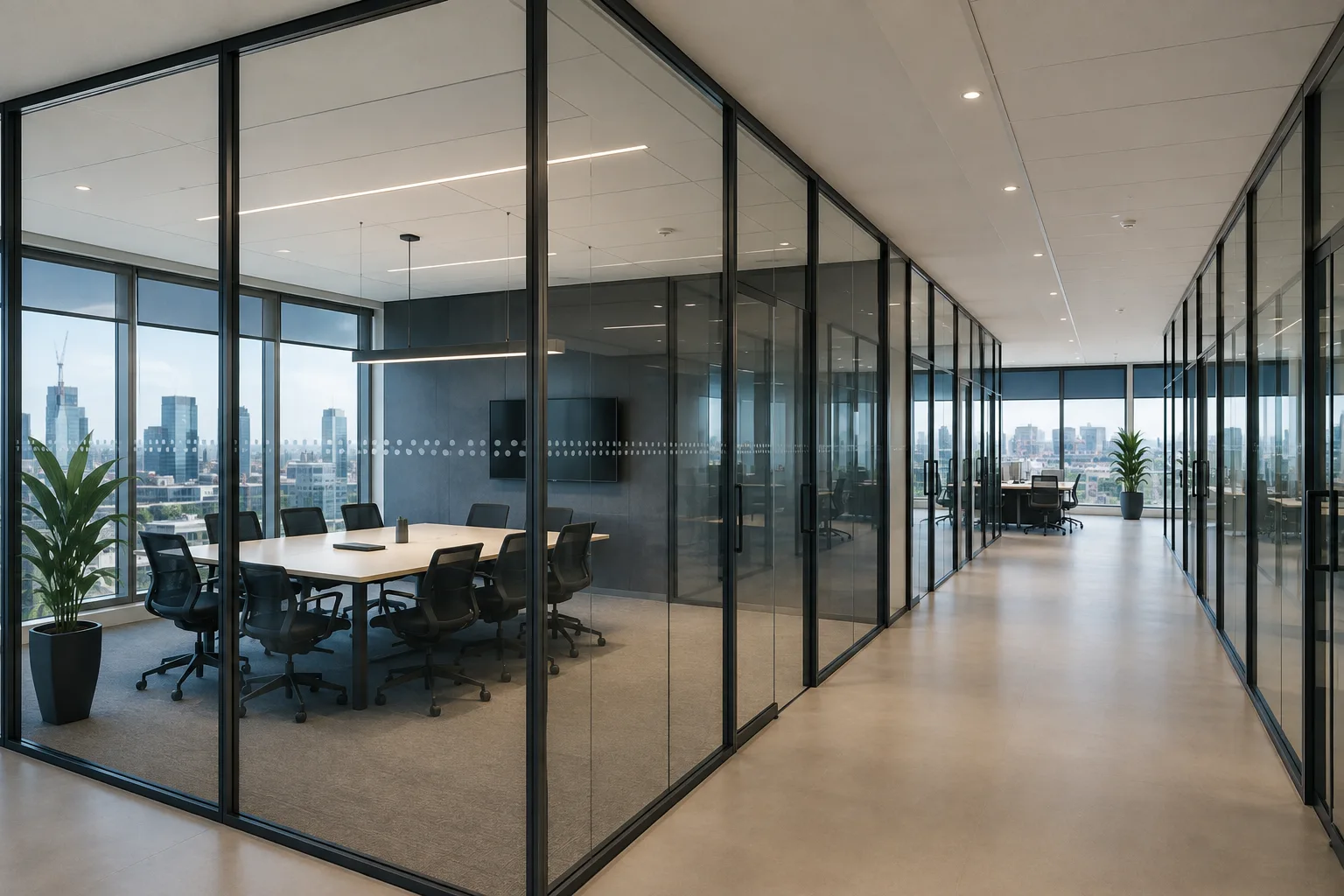
One of the strongest reasons businesses choose glass partitions is to make better use of natural light. Solid walls can create clearly separated rooms, but they can also prevent daylight from reaching deeper into the workplace, particularly when meeting rooms or private offices sit in the centre of an open-plan floor.
Switchable glazing offers a different approach because the glass does not have to remain permanently obscured. When privacy is not required, transparent glazing maintains visual connection and allows daylight through; when privacy is needed, the glass switches to its opaque state.
Good office lighting design also needs to consider glare. The UK’s Health and Safety Executive notes that light reflecting from surfaces such as display screens can contribute to glare, and recommends appropriate measures to control it.
Smart Glass vs Smart Film for Offices
For an existing office, one of the first questions should be whether the current glazing can be retained. If suitable glass is already installed, self-adhesive smart film can provide a practical retrofit solution without replacing the entire glass panel.
For new office construction or a major glazing replacement, laminated smart glass may be more appropriate because the PDLC technology is incorporated into the glazing itself. SmartPro explains the differences between the two solutions in its guide to smart glass and self-adhesive smart film.
| Feature | Self-Adhesive Smart Film | Laminated Smart Glass |
|---|---|---|
| Existing office glass | Ideal | Usually requires replacement |
| New glazing | Possible | Ideal |
| Retrofit application | Yes | Limited |
| Installation disruption | Generally lower | Higher |
| PDLC layer | Applied to existing glass | Incorporated into glazing |
| Best suited to | Office refurbishments | New partitions and glazing |
The final choice should also consider panel dimensions, glass specification, frame construction, wiring routes, control requirements and the environment in which the glazing will be used.
How Much Does Smart Glass Cost for an Office?
The cost of an office smart glass project depends on several factors, including the total glass area, individual pane sizes, glass specification, shape, electrical configuration and installation requirements.
For existing suitable glazing, self-adhesive smart film can often be a more practical retrofit option because the original glass can be retained. For new partitions or replacement glazing, laminated switchable smart glass provides a fully integrated solution.
SmartPro’s current starting price for self-adhesive smart film is £190 per m², with a minimum chargeable area of 1 m² per pane. Laminated smart glass starts from £550 per m² for 5+5 mm laminated toughened smart glass, while double-glazed smart glass starts from approximately £690 per m², depending on specification.
For a commercial project, the final quotation should be based on the actual dimensions, number of panes, glazing specification, wiring requirements and installation conditions rather than an approximate overall area.
A UK Office Example
Consider a London office with several glazed meeting rooms positioned around an open-plan workspace. The company wants to maintain daylight and visual connection during normal working hours but needs greater privacy for client meetings and internal discussions.
Switchable smart glass or smart film could allow those rooms to remain transparent when available and change to their privacy state when required. This creates a more flexible workspace without replacing the glass partitions with permanent solid walls.
The same principle can be applied to boardrooms, interview rooms, executive offices and other areas where privacy requirements change throughout the day. The technology therefore becomes part of the office’s overall space-planning strategy rather than simply an additional privacy product.
Can Smart Glass Improve the Use of Office Space?
One of the less obvious benefits of switchable glazing is that it can make individual rooms more adaptable. A room that is normally visually open can become a private meeting room, interview room or focused workspace without requiring physical blinds or curtains.
This can be particularly useful in offices where space is limited and individual rooms need to serve multiple purposes. Instead of designing separate spaces for every activity, businesses can make existing rooms more flexible.
The technology can also support modern presentation environments. When the glass is in its opaque state, it can be used as a rear-projection surface for presentations, subject to the appropriate projector and installation arrangement.
Is Smart Glass Suitable for Every Office?
Smart glass is particularly well suited to internal office applications where visual privacy is required while natural light and transparency remain important. Common applications include meeting rooms, boardrooms, executive offices, reception areas, glazed corridors and internal partitions.
The suitability of a particular product depends on the glazing, environment and installation conditions. For example, self-adhesive PDLC film is generally intended for suitable indoor applications, while laminated smart glass can be specified where a more protected glazing construction is required.
For existing glazing, the condition and construction of the glass should also be checked before specifying a retrofit film. This helps ensure that the proposed solution is technically suitable and that the wiring and installation can be planned correctly.
Designing a Smarter Office with Smart Glass
The strongest applications of smart glass are often the simplest. A glazed meeting room with switchable privacy can provide a significant improvement in flexibility without changing the basic layout of the office.
The technology works particularly well when considered during the early design stage. Architects, interior designers and facilities teams can identify which spaces require permanent privacy, which need occasional privacy and which should remain visually open.
This creates a more deliberate approach to office privacy rather than treating privacy as something that has to be added after the interior has already been designed.
For a broader look at workplace privacy, read our pillar guide, Office Privacy Solutions: How to Bring Privacy into Modern Offices.
Frequently Asked Questions
Does smart glass make an office completely private?
When switched to its privacy state, PDLC smart glass prevents normal visibility through the glass. It provides visual privacy, but it should not be confused with acoustic privacy or soundproofing.
Does smart glass block all sunlight?
No. Smart glass is not a blackout solution. In its opaque state, it diffuses incoming light, so some daylight will still pass through.
Can existing office glass be made private?
Yes. Suitable existing glass can often be upgraded with self-adhesive smart film, making it a practical option for office refurbishments. The existing glazing should be assessed before installation.
Is smart glass suitable for meeting rooms?
Yes. Meeting rooms and boardrooms are among the most suitable applications because the glass can remain transparent when the room is open and switch to its privacy state when required.
What is the difference between smart film and smart glass?
Smart film is applied to suitable existing glass, making it particularly useful for retrofit projects. Smart glass has the PDLC technology incorporated into the glazing and is generally specified when new glass is being manufactured or existing glazing is being replaced.
How much does smart glass cost for an office in the UK?
The cost depends on the product, glass area, specification, electrical requirements and installation. SmartPro’s current starting prices are £190/m² for self-adhesive smart film, £550/m² for laminated smart glass and approximately £690/m² for double-glazed smart glass, subject to specification.
Final Thoughts
Smart glass gives offices a simple way to make privacy flexible. Instead of choosing between completely open glazing and permanently enclosed rooms, businesses can create spaces that remain transparent when openness is useful and become private when confidentiality matters.
For modern UK workplaces, this can be particularly valuable in meeting rooms, boardrooms, executive offices and open-plan environments where daylight, visual connection and privacy all need to work together. The right solution will depend on whether the project involves existing glazing, new partitions or a complete office refurbishment.
If you are considering smart glass or smart film for an office project, contact SmartPro Glass with your glass dimensions, photographs and intended application. Our team can advise on the most suitable solution for the existing or proposed glazing.