

Smart Film on Existing Windows: Installation Challenges, Wiring and Cost

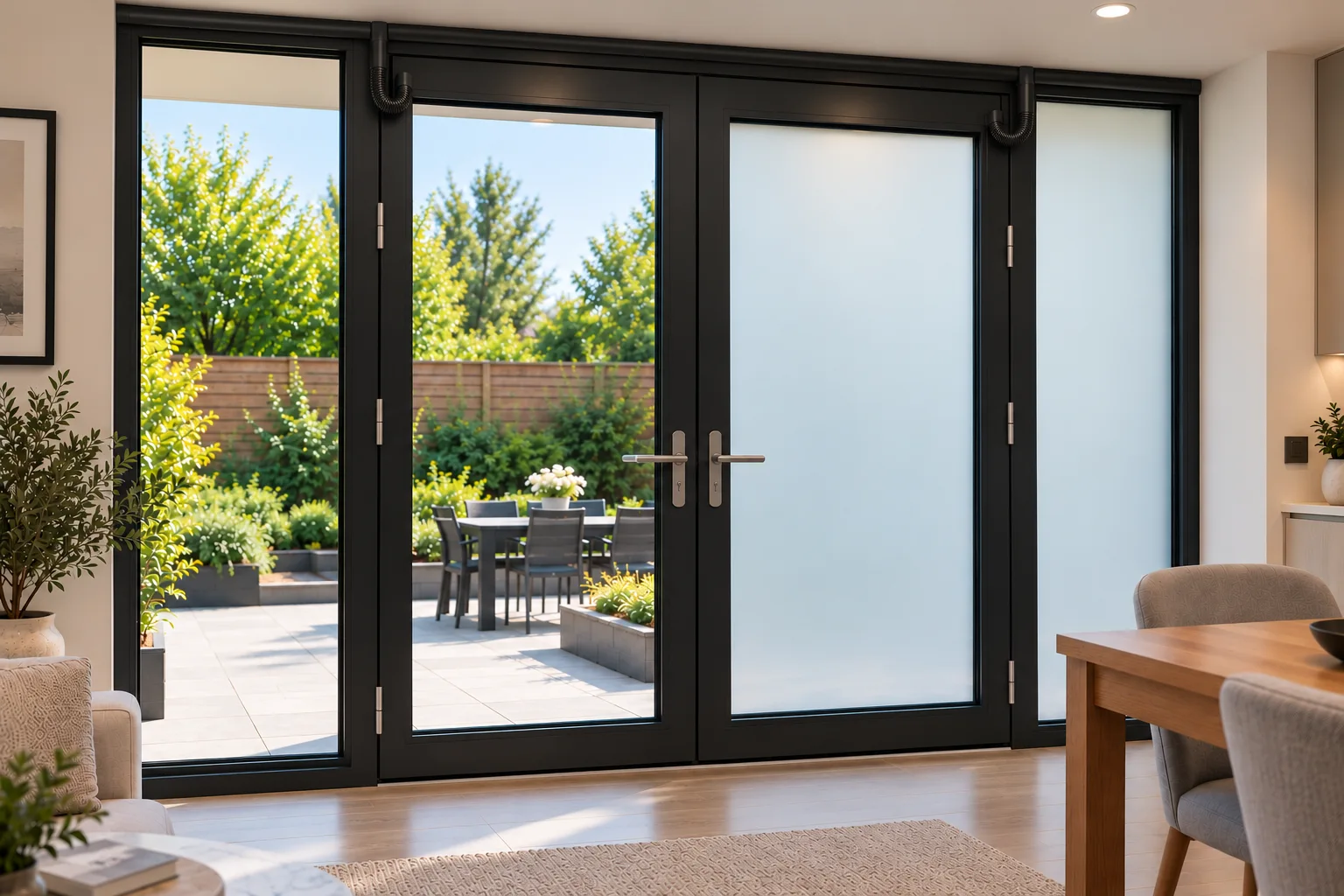
Can you add smart film to windows you already have?
Replacing windows is not always necessary to introduce switchable privacy. Self-adhesive PDLC smart film can be applied to suitable existing glass, allowing homeowners and businesses to retain their current glazing while adding privacy at the touch of a switch.
However, successful retrofitting depends on more than the film itself. Glass condition, surface coatings, access to electrical connections and the design of the window frames all affect the installation.
How does retrofit smart film work?
PDLC smart film contains a layer that changes its optical state when an electrical current is applied. When the power is ON, the film is transparent; when the power is OFF, it becomes opaque, obscuring the view while still allowing diffused natural light through.
A busbar connects the film to a suitable power supply. Depending on the layout, several panes can be operated together or divided into separate control zones.
For a technical overview, link to your PDLC Smart Film product page.
Is your existing glass suitable?
Smart film is generally most suitable for clean, smooth glass in good condition. It can be considered for residential windows, internal office glazing, meeting-room partitions and some secondary-glazing installations.
Before specifying the product, check:
- Glass condition: cracked, chipped or badly damaged glass should be assessed before installation.
- Surface coatings: low-emissivity, self-cleaning or other specialist coatings may affect suitability or adhesion.
- Access: installers need sufficient access to prepare the glass and finish the film edges.
- Moisture and exposure: locations exposed to persistent moisture or demanding environmental conditions may require a different solution.
If the project involves replacing glazing or requires a more integrated finish, compare retrofit film with laminated smart glass. The appropriate option depends on the application and installation environment.
Installation challenges: wiring, frames and moving windows
The most important installation decision is where the electrical connections will go. The film needs a busbar connection and wiring to a suitable power supply, so cable routes should be planned before the film is applied.
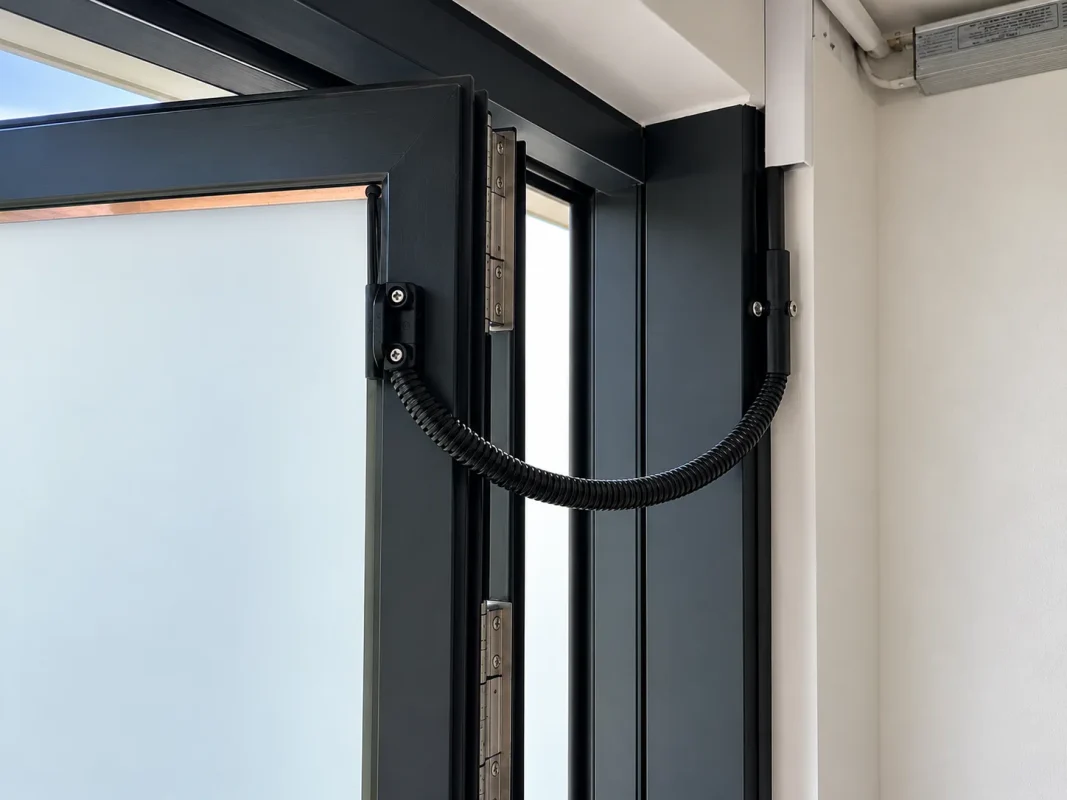
1. Concealing the wiring
Existing frames do not always have enough space for concealed cables. Where the wiring cannot be hidden inside the frame, discreet trunking may be needed along one side of the window.
2. Opening and hinged windows
Windows that open require additional planning. For hinged secondary glazing, a suitable flexible door loop can allow the wire to pass between the fixed frame and moving panel without being strained during operation.
3. Power supply and controls
Several panes can often be controlled together from one power supply, depending on the system design. For SmartPro Glass installations, we recommend planning the cable route so the distance from the power supply to the furthest window does not exceed 10 metres, unless the system specification confirms otherwise.
4. Film edges and finishing
The film must be cut to the correct dimensions, with suitable clearance around the edges and the busbar connections. A neat finish depends on accurate measurements, clean glass, careful application and appropriate edge protection.
Electrical work should be planned and carried out safely.
How much does smart film cost in the UK?
The cost depends on the total area, number of panes, wiring requirements and whether installation is included.
| Item | SmartPro Glass price |
|---|---|
| Self-adhesive PDLC smart film | £190/m² |
| Minimum charge | 1 m² per pane |
| Power supply | £110 each |
| Installation | Quoted according to site requirements |
For example, consider five small panes, each measuring less than 1 m². If each pane is charged at the 1 m² minimum, the film cost would be £950. Adding one £110 power supply brings the materials total to £1,060, before installation and any additional wiring or finishing work.
This is an illustrative calculation, not a fixed installation quotation. A final price should be based on the actual window measurements, cable routes, frame design and site conditions.
Smart film or replacement smart glass?
Retrofit film is worth considering when the existing glass is suitable and replacing it would create unnecessary expense or disruption. It allows the original glazing and frames to remain in place.
Replacement smart glass may be more appropriate where the glazing is damaged, the project is a new build, or a more integrated solution is required. For a detailed comparison, read our guide to Smart Glass vs Smart Film.
Frequently asked questions
Can smart film be installed on existing double glazing?
It may be possible to apply self-adhesive film to a suitable glass surface, including the accessible internal pane of some double-glazed windows. Suitability should be checked for the specific glazing before ordering.
Do I need to replace my window frames?
Usually not. The film is designed to be applied to suitable existing glass, although wiring and finishing may require additional work around the frames.
Can smart film be installed on opening windows?
Yes, in suitable installations. Hinged panels need a planned wire route and, where necessary, a flexible door loop to protect the connection during opening and closing.
Can several windows operate from one switch?
Yes, multiple panes can often be connected to a shared control system. The number of panes and the wiring layout must be compatible with the chosen power supply and controller.
Does smart film reduce heat or UV exposure?
PDLC smart film is primarily a switchable privacy solution, not a dedicated solar-control product. If heat reduction or UV protection is the main requirement, ask for the relevant tested performance data and consider whether specialist glazing is more suitable.
How can I get an estimate?
Provide photographs of the windows, approximate glass dimensions, details of which panels open, and information about whether wiring can be concealed. This helps establish the likely installation requirements before a site assessment.
Conclusion
Retrofitting smart film can add switchable privacy without replacing suitable existing windows, but the quality of the result depends on careful planning. Glass suitability, busbar placement, wiring routes and the final finish should all be considered before installation begins.
If you’re considering smart film for your property or project, contact SmartPro Glass with your window dimensions and photographs to discuss suitability and pricing.