

PNLC vs PDLC Smart Film: Key Differences, Performance and Cost

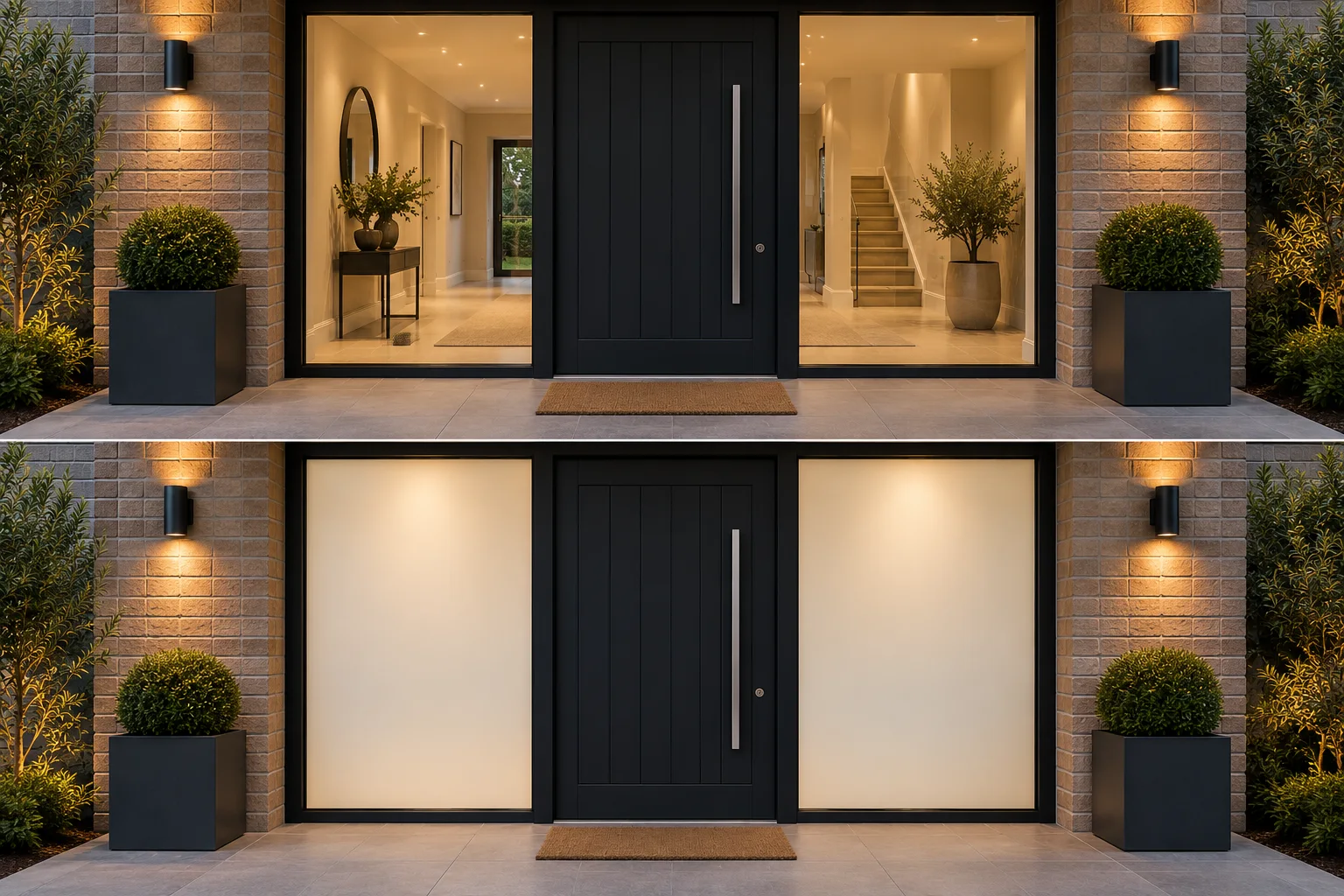
Smart film technology allows glass to switch between transparent and frosted states, giving homes, offices, hotels and commercial buildings flexible privacy without traditional blinds or curtains. Two of the main technologies used in switchable smart film are PDLC (Polymer Dispersed Liquid Crystal) and PNLC (Polymer Network Liquid Crystal), each offering distinct characteristics in terms of structure, optical clarity, technological development and price.
Although both technologies can provide switchable privacy, they are not identical in everyday use. PDLC has been commercially available for many years and is widely used across different applications, while PNLC is a newer technology that may appeal to projects with specific performance requirements. However, PNLC’s higher price means it is not automatically the better choice.
What Is PDLC Smart Film?
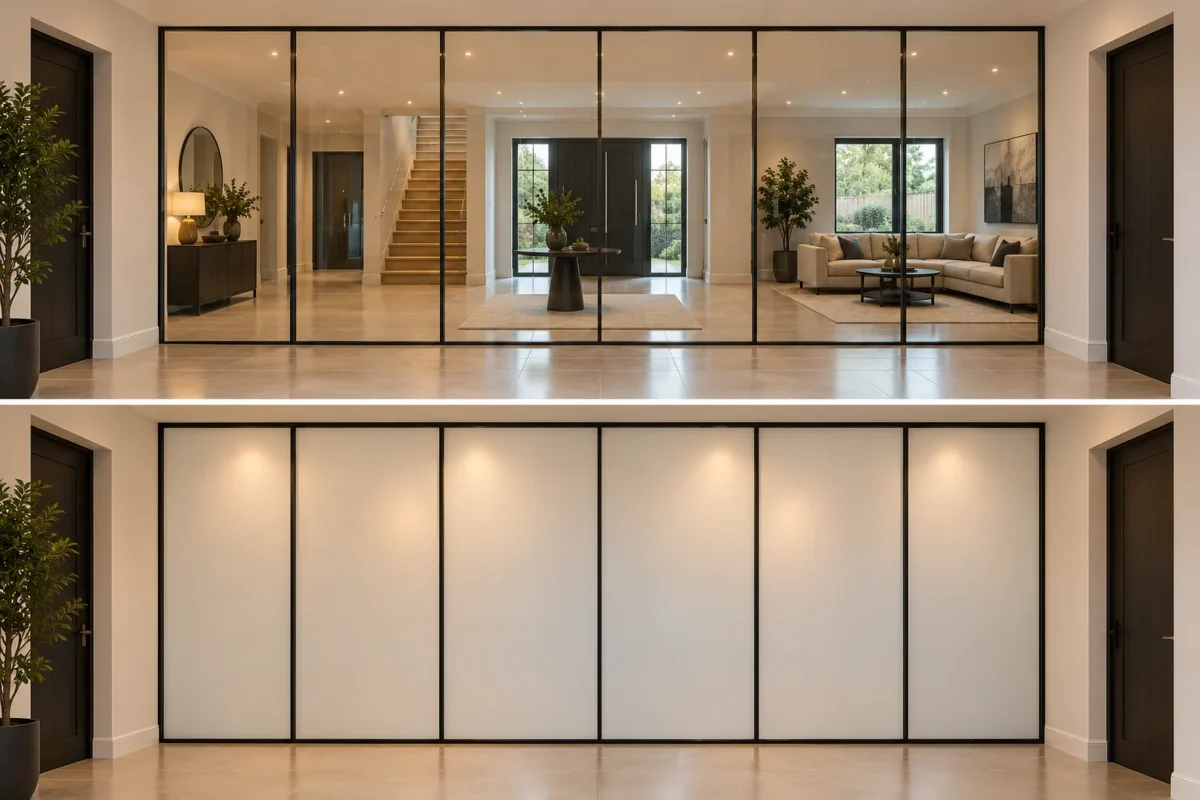
PDLC is one of the most established technologies used in switchable privacy film. When electrical power is applied, the liquid crystals align to allow light to pass through more directly, making the film appear transparent. When power is switched off, the crystals scatter light, creating a frosted or opaque appearance that provides visual privacy.
Because PDLC has been used commercially for many years, the technology is well established, with a broad range of products, widths and installation solutions available in the market. It is commonly used in office partitions, meeting rooms, residential glazing, consultation rooms and other environments where users need to switch between transparency and privacy.
For existing glazing, self-adhesive smart film from SmartPro Glass can provide a retrofit option, while switchable smart glass is worth considering for new or replacement glazing projects.
What Is PNLC Smart Film?
PNLC stands for Polymer Network Liquid Crystal. It is a newer technology in the switchable-film market, using a polymer network structure to control the liquid crystals and produce a change in the appearance of the film when electrical power is applied.
PNLC products are often offered in reverse-switching configurations, where the film is clear when power is off and becomes frosted when power is applied. The precise operating behaviour depends on the product, so the manufacturer’s technical specification should always be checked before ordering.
PNLC can be attractive where its particular switching behaviour or other product-specific characteristics suit the project. However, being newer does not automatically mean it performs better overall, and its optical properties, availability, electrical requirements and cost should be assessed against the actual needs of the installation.
PNLC vs PDLC: Key Differences
The main differences concern clear-state appearance, haze, market maturity, availability and price. These factors can be just as important as the ability to switch between clear and private states.
| Feature | PDLC Smart Film | PNLC Smart Film |
|---|---|---|
| Technology maturity | Established technology with many years of commercial use | Newer technology in the market |
| Typical switching behaviour | Usually clear when ON and frosted when OFF | Often offered in reverse-switching versions; verify the product specification |
| Haze in clear state | Generally lower haze and a clearer appearance | Around 10% haze in the off state |
| Visual clarity | Generally offers better clarity in the clear state | Higher haze can make the clear state appear less crisp |
| Reliability | Long market history and established use provide a stronger track record | Long-term performance should be assessed using product-specific evidence |
| Available widths | Broad range of widths is generally available across the market | Width options may be more limited, depending on the supplier |
| Relative cost | More economical option | Can cost nearly 10 times more than comparable PDLC film |
| Typical suitability | Most standard privacy applications | Projects where its specific characteristics justify the premium |
These are general market comparisons, not guaranteed specifications for every product. Haze, visible light transmission, available widths, switching behaviour and durability vary by manufacturer and product range, so request current technical data before making a final selection.
Clear-State Haze: An Important Difference
One of the most important optical considerations is haze when the film is in its clear state. Based on the PNLC specification being discussed, clear-state haze is around 10%, whereas PDLC products generally offer a clearer appearance with lower haze.
Haze describes how much light is scattered as it passes through a material. A higher haze value can make objects behind the glass look less sharp, even when the film is nominally in its transparent state. This matters in offices, retail environments and homes where maintaining a clean, unobstructed view is a priority.
For this reason, buyers should not compare PNLC and PDLC based only on whether each product can become transparent. Ask for the clear-state haze and visible light transmission figures for both products, and compare physical samples under the lighting conditions in which they will be used.
Which Technology Is More Reliable?
PDLC has been commercially available for many years and is used across a wide variety of projects. This long history gives buyers and installers a more established basis for assessing its performance, sourcing replacement products and understanding installation requirements.
PNLC is newer, so its long-term performance record may be less established depending on the supplier and product. That does not mean PNLC is inherently unreliable, but it does mean buyers should examine product-specific test results, warranty terms, supplier experience and evidence of performance over time rather than assuming the newer technology is superior.
Reliability also depends on factors beyond the film technology itself, including manufacturing quality, electrical control equipment, installation, edge protection and whether the film is used within the manufacturer’s recommended conditions.
Availability and Available Film Widths
PDLC has a mature supply market, with a wide variety of products and film widths available from different manufacturers. This can make it easier to specify PDLC for different glazing dimensions and project types, although maximum widths and lengths still depend on the supplier and product.
PNLC availability may be more limited, particularly when a project requires unusual dimensions or large continuous panels. Before selecting PNLC, confirm the maximum roll width, maximum panel dimensions, manufacturing tolerances, lead time and whether joints or multiple sections would be required.
For large office partitions or full-height glazing, these details can influence the finished appearance, installation complexity and overall cost. A film that appears attractive on paper may not be the most practical choice if its available dimensions do not suit the project.
PNLC vs PDLC: How Much Does Each Cost?
Price is one of the most significant differences between the two technologies. PNLC film can cost nearly 10 times as much as conventional PDLC film, making it a substantial premium for projects with large glazed areas.
PDLC is generally the more economical option for standard applications such as office partitions, meeting rooms and residential glazing. PNLC may be worth considering where its specific characteristics offer a meaningful advantage, but that advantage needs to justify the considerable price difference.
When comparing quotations, check that both products are being assessed on a like-for-like basis. The comparison should include film dimensions, optical performance, controller and power supply requirements, installation, warranty and any additional work needed to prepare the glazing.
For many projects, PDLC offers a more practical balance between price, clarity, market availability and established performance. PNLC is better viewed as a premium alternative for projects where its particular benefits justify the additional expense, rather than as an automatic upgrade.
Which Technology Is Better for Offices?
For most standard office privacy applications, PDLC is a strong starting point. It offers established performance, generally better clarity in the clear state, broad market availability and a substantially lower price than PNLC.
Consider a London office with several glass meeting rooms. If the project requires clear visibility between meetings and frosted privacy during confidential discussions, PDLC can provide the required switching functionality without the substantial additional cost of PNLC. Its established market presence may also make sourcing suitable widths and arranging installation more straightforward.
PNLC may still be worth evaluating where a particular product characteristic is essential and the project budget can accommodate the premium. These are illustrative scenarios rather than reports of specific customer installations; the final decision should be based on verified specifications and the actual requirements of the space.
Can PNLC and PDLC Be Used on Existing Glass?
Both technologies may be available in film formats designed for application to suitable existing glazing, although availability and installation methods vary by manufacturer. Other products may be intended for integration into laminated glass rather than being applied as a retrofit film.
Before ordering, confirm the film construction, maximum dimensions, wiring arrangements, busbar position and edge-sealing requirements. Existing glass must also be suitable for the selected product and installation method.
SmartPro Glass provides further guidance on installing smart glass on existing windows and on its office smart glass applications.
How to Choose Between PNLC and PDLC
Start by identifying the required switching behaviour: should the glass be clear or frosted when power is off? Then compare clear-state haze, visible light transmission, privacy performance, available dimensions, electrical requirements, warranty and price.
For most projects, PDLC is the logical starting point because of its long market history, generally clearer appearance, broader availability and lower cost. PNLC may be appropriate when its specific characteristics solve a clearly defined requirement and the additional cost is justified.
Before committing to a large order, obtain technical datasheets and samples of the actual products under consideration. Testing them in realistic lighting conditions is one of the best ways to evaluate visual clarity, privacy and suitability for the finished space.
Frequently Asked Questions
1. What is the main difference between PNLC and PDLC smart film?
Both technologies allow glass to switch between transparent and frosted states, but they differ in construction and product performance. PDLC is an established technology, while PNLC is newer and may have different optical characteristics and switching behaviour depending on the product.
2. Is PNLC clearer than PDLC?
Not necessarily. For the PNLC specification discussed here, clear-state haze is around 10%, while PDLC generally offers a clearer appearance with lower haze. Always compare the manufacturer’s actual haze and visible light transmission figures.
3. Is PNLC more expensive than PDLC?
PNLC film can cost nearly 10 times more than comparable PDLC film. The exact difference depends on the supplier, specification, dimensions and order, so obtain comparable quotations before deciding.
4. Is PDLC more reliable?
PDLC has many years of commercial use, giving it a more established track record. Actual reliability still depends on product quality, installation and operating conditions, so assess the evidence and warranty for the specific product.
5. Is PDLC available in more widths?
PDLC generally has a broader range of available widths across the market because it is a mature, widely supplied technology. PNLC options may be more limited, so confirm maximum dimensions and availability with the manufacturer.
6. Which technology should I choose for my project?
PDLC is generally the practical choice for standard privacy applications where clarity, availability, established performance and cost matter. PNLC is worth considering when its specific characteristics provide enough benefit to justify the higher price.
Final Thoughts
PNLC and PDLC both provide switchable privacy, but the right choice depends on more than the basic switching function. PDLC benefits from a long commercial history, generally better clear-state clarity, wider market availability and a much lower price, while PNLC is a newer, premium alternative whose specific benefits should be evaluated carefully.
For most everyday office, residential and commercial privacy applications, PDLC is a sensible starting point. To explore available products and project options, visit SmartPro Glass’s technology guide or contact the team to discuss your requirements.